FORM & GEOMETRY / Metal Bending & Forming
Form the profile. Protect the fit.
Specify formed parts around their final geometry and mating interfaces. The right bend information connects the flat blank to the component your team needs to install.
01 / THE PROCESS
Start with the application.
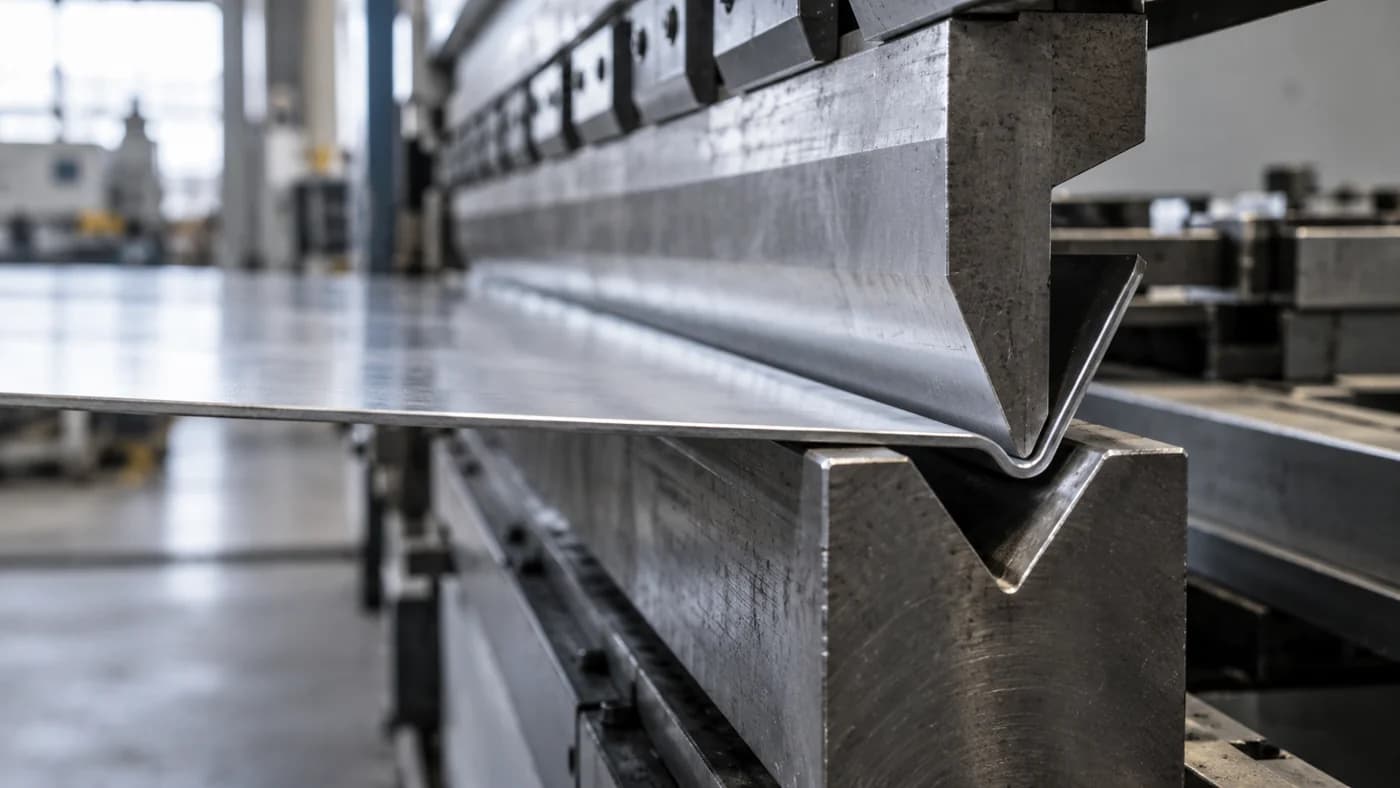
Press-brake bending forms sheet or plate between tooling to produce angles, channels and other profiles. Material properties, thickness, bend radius and tool access influence the result.
A flat pattern uses bend allowances or deductions to relate developed length to the finished dimensions. Springback changes the angle after load is released. These effects need process-specific consideration; an assumed allowance is not a substitute for an agreed finished-part drawing.
02 / APPLICATIONS
Typical fabrication applications.
Potential project types to help define your scope.
Press-brake parts
Components with defined bend lines, angles and final dimensions.
Channels
Open profiles with flange dimensions and internal clearances specified.
Angles
Simple or unequal-leg sections with radius and reference dimensions.
Brackets
Multi-bend supports with hole positions and mating surfaces coordinated.
Formed panels
Returns, edges and stiffening features for covers and architectural work.
Custom profiles
Project-specific sections checked for bend sequence and tooling access.
Repeat production components
Revision-controlled parts with agreed inspection and fit criteria.
03 / MATERIAL SELECTION
Choose for the working environment.
Material suitability and availability are reviewed against your specification.
Carbon steel
Grade and thickness affect bendability and springback. A stronger grade may need a different radius or forming approach.
Stainless steel
Grade, surface protection and grain direction should be identified. Visible faces may need additional handling requirements.
Aluminum
Alloy and temper are important to bend feasibility. Tight bends suitable for one alloy may crack another.
04 / FABRICATION CAPABILITIES
Connect the processes.
Bend sequence review
Check tool access, return flanges and collisions. Closely spaced bends may constrain the order of operations.
Radius & allowance planning
Specify the required inside radius and finished geometry. Confirm which party develops the flat pattern and how allowances are established.
Dimensional & surface checks
Identify critical angles, reference faces and fit dimensions. State acceptable tooling marks and any finish protection.
05 / INDUSTRIES SERVED
Built around your sector.
06 / PROJECT REQUIREMENTS
A better brief.
A clearer quote.
Provide a finished-part drawing with material thickness, inside radii, bend angles and dimension references. Identify rolling direction if controlled and distinguish inside from outside dimensions.
Add supported drawings in the secure document step when upload is available. You can also submit the scope without files and identify what needs clarification.
PREPARE YOUR RFQ ↗Drawings & specifications
Identify the revision, units, intended use and critical dimensions. Describe available drawings in your inquiry.
Material & quantities
State material preferences, thickness or section, part quantities and repeat-order expectations.
Finish & acceptance
Define finish, visible faces, dimensional requirements, inspection and documentation.
Delivery & schedule
Include city, province, access or unloading constraints and the required project dates.
Installation & interfaces
Identify site work, mating components, measurement responsibilities and installation needs where applicable.
QUESTIONS / ANSWERS
Before you specify.
Should I dimension the inside or outside of a bend?
Either can be used if the drawing is clear and consistent. Label the reference surfaces, thickness and inside radius so the intended geometry is unambiguous.
Can you use my existing flat pattern?
It can be reviewed, but its bend assumptions must match the intended material and forming setup. Supply the finished-part drawing as the controlling reference.
Why does bend radius matter?
Radius affects strain, the developed blank and how the part fits. The feasible radius depends on material, thickness and forming conditions.
What is springback?
After forming force is removed, the material tends to recover elastically and the angle changes. The amount depends on material and the forming setup.
Can formed parts keep a cosmetic finish?
Specify visible faces, grain direction and acceptable marking. Protective handling and tooling arrangements need review, especially around bends and secondary operations.
MATERIAL / METHOD
Explore the fabrication decisions.
Relevant capabilities
Material guidance
CONNECTED PROCESSES
Complete the fabrication scope.
FOCUSED FABRICATION
Start with the component you need.
Explore specific metalwork requirements, from individual mounting parts to complete fabricated assemblies.
Custom Brackets & Plates
Define the connection before the component. Mounting brackets, adapter plates and gussets bring equipment, frames and building interfaces together when catalogue hardware does not suit the geometry.
EXPLORE REQUIREMENTS ↗FABRICATED PRODUCTS
From a fabrication process to a useful product.
Public realm
Skate Deterrents
Custom metal skate deterrents for ledges and site furniture. Discuss profiles, mounting substrates, finishes, pedestrian access and project quantities.
EXPLORE PRODUCTTransit & mobility
Commercial Bike Racks
Commercial bike rack fabrication for inverted-U racks, rails and custom layouts. Plan frame support, locking access, spacing, anchors and outdoor finishes.
EXPLORE PRODUCTPublic realm
Metal Benches
Custom fabricated metal benches and seating frames for commercial and public spaces. Define seat geometry, armrests, drainage, anchorage and repairable components.
EXPLORE PRODUCTYOUR NEXT STEP
Quote the geometry that needs to fit.
Share the finished dimensions, radii, material thickness and critical interfaces for your formed parts.