FABRICATION SPECIALTIES / CUSTOM BRACKETS & PLATES
Custom Brackets & Plates: Small components. Critical connections.
Define the connection before the component. Mounting brackets, adapter plates and gussets bring equipment, frames and building interfaces together when catalogue hardware does not suit the geometry.
FUNCTION / FIT / FINISH
Define the part in its working context.
A useful bracket drawing identifies more than the outside dimensions. It records the mounting faces, hole centres, fastener clearances and the way force enters the connection. Supply the mating-part drawing or a measured interface so the complete fit can be reviewed.
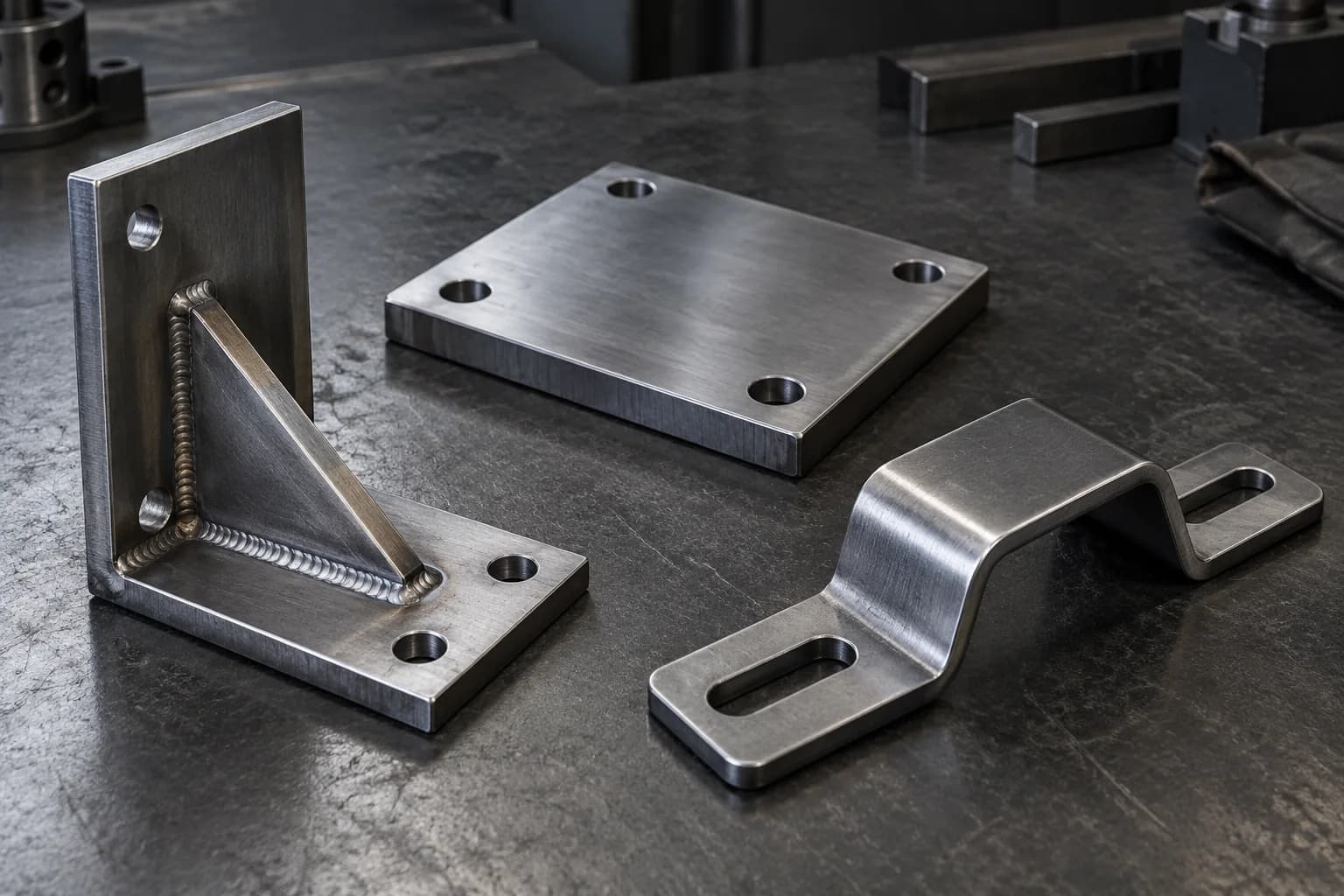
Cut plate, folded sheet and welded assemblies solve different problems. A formed bracket may reduce welds, while a gusseted assembly may suit a deeper offset. Thickness, connection design and material grade must follow the required duty; a photograph alone cannot establish a load rating.
APPLICATIONS
Where the scope begins.
Equipment mounting
Motor, sensor and accessory brackets coordinated with mounting patterns, adjustment travel and maintenance access.
Interface plates
Adapters between existing and new components, with datum locations and bolt access identified.
Frames and fit-outs
Cleats, tabs and stiffeners for assemblies, partitions and fixtures, with load-bearing responsibility defined.
DESIGN / PROCUREMENT
Resolve the details before fabrication.
Holes and slots
Provide centre-to-centre dimensions, diameters, slot direction and clearance requirements. Identify threads, countersinks and critical mating features separately.
Loads and installation
State applied loads, vibration, offsets and fixing substrate. Assign structural calculations, anchor selection and approval to the responsible designer where required.
Finish allowance
Specify corrosion exposure and coating. Identify masked threads or contact faces, visible edges and whether the finished fit includes coating thickness.
QUOTE PREPARATION
What to send for bracket pricing.
Controlled geometry
Send a dimensioned drawing with units and revision, or clearly identify which dimensions still need verification.
Quantity and grouping
List each part number and quantity, left/right variants and any prototype approval before repeat batches.
Acceptance criteria
Mark fit-critical dimensions, material documentation and finish expectations. Avoid blanket tight tolerances on non-critical edges.
Connect material and process.
Scope, material suitability, process availability and any inspection or installation commitments are confirmed through project review.
Material selection
Fabrication processes
CONNECTED PROCESSES
Complete the fabrication scope.
QUESTIONS / ANSWERS
Before you specify.
Can you work from a sample bracket?
A sample can help define the brief. State whether it is worn or distorted and identify critical dimensions. Measurement, drawing approval and any design responsibility need to be agreed before manufacture.
Can mounting slots allow adjustment?
Slots can provide adjustment when the connection design allows it. Specify the adjustment direction, travel and fastening arrangement for review.
Can I request a single replacement?
Include the required quantity, including one-off requests. Suitability, setup cost and availability are reviewed for the individual scope.
Does a thicker plate automatically increase the rated load?
No. Fasteners, welds, geometry, supporting material and loading all affect performance. A rated connection requires an appropriate design assessment.
YOUR NEXT STEP
Bring your custom brackets & plates brief.
Include the component name in your project title, then add drawings, quantities, finish, delivery location and required dates. The quote link selects the relevant fabrication service.