MATERIALS / ALUMINUM
Aluminum: Match the alloy to the way the part is made.
Lower component mass can be useful, but alloy, temper and geometry determine how aluminum performs. Select the material with its forming, joining and finish requirements in view.
CONTEXT / REQUIREMENTS
Start with the specified duty.
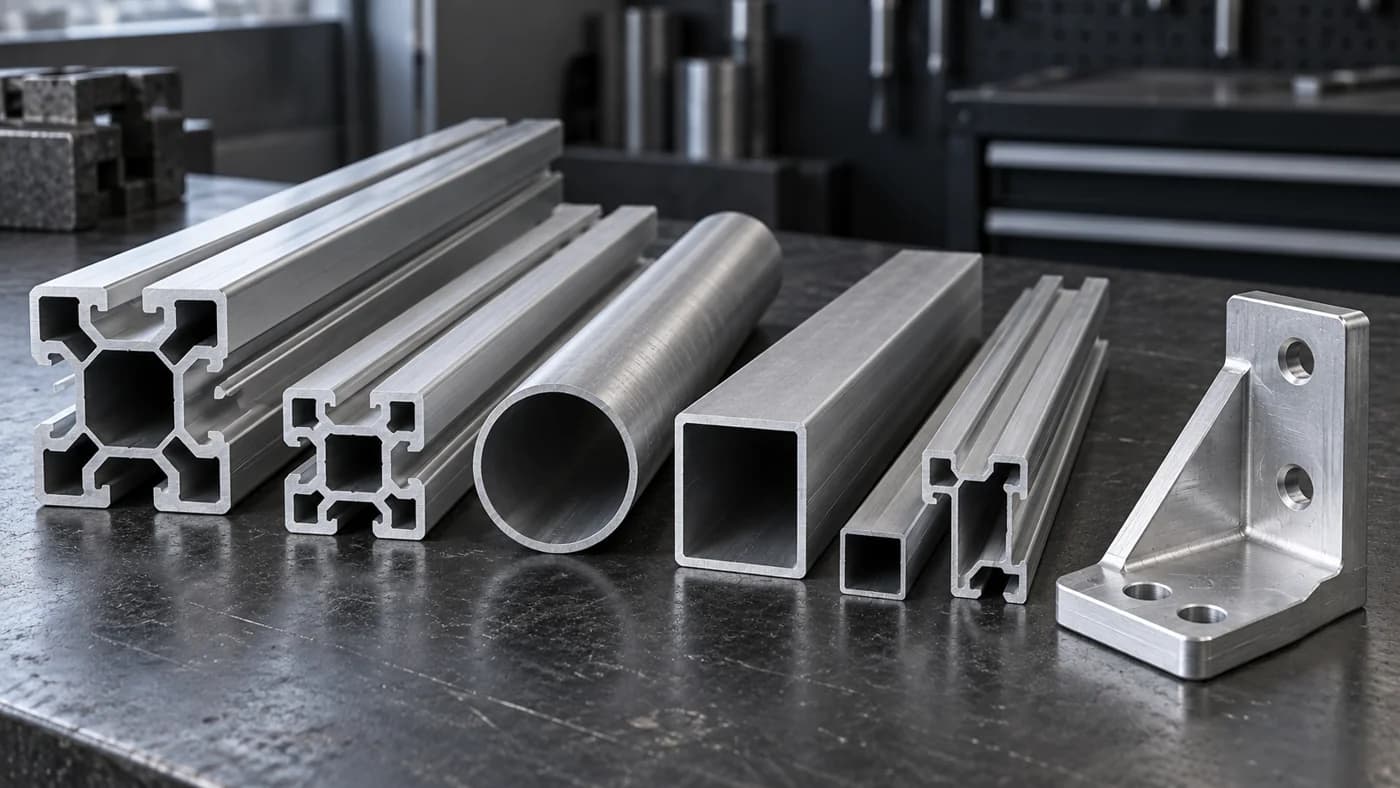
Aluminum alloys are available in sheet, plate, extrusions and other forms with different mechanical and fabrication properties. Alloy number and temper together describe more than the generic word aluminum.
The examples here are general material guidance, not an inventory or a capacity commitment. Confirm the specified product form, temper, documentation and process suitability during quotation. Load-bearing substitutions need appropriate design review.
APPLICATIONS / COMPONENTS
Where it fits the project.
Examples for scoping a project. Final suitability depends on the design and operating conditions.
Equipment frames
Lightweight structures with mounting, stiffness and joining requirements.
Formed enclosures
Covers and panels with alloy and bend geometry coordinated.
Architectural sections
Extruded or fabricated elements with attachment and appearance criteria.
Handling components
Brackets and assemblies where weight and repeated use influence design.
GENERAL MATERIAL GUIDANCE
Common grades and product forms.
5052 sheet
Commonly considered for formed sheet components. Temper, thickness and bend radius still need to be compatible with the design.
6061
A widely used heat-treatable alloy in frames and equipment-related products. Joining can affect properties near the weld and must be considered in the design.
6063 extrusions
Often associated with architectural extrusion applications. Section geometry, temper and finish requirements should be specified together.
FABRICATION
Coordinate forming and joining.
Bend feasibility
Not every alloy or temper suits a tight bend. Identify radii and rolling-direction constraints where they matter.
Welded condition
Heat can change local properties, especially in heat-treated alloys. The finished assembly must be assessed in its actual joined condition.
Connections
Identify mating metals, fasteners and moisture exposure. Dissimilar-metal contact may need isolation or other design measures.
FINISHES
Consider the surface early.
Anodizing
Alloy, welds and mixed components can affect appearance. Agree colour and visual acceptance requirements before fabrication.
Coatings
Specify preparation, exposure, masking and the intended coating system rather than colour alone.
Bare surfaces
An uncoated surface may suit some uses, but cleaning, wear and exposure still need consideration.
TRADEOFFS
Look beyond weight alone.
Mass and stiffness
A lighter material does not automatically make an equivalent part. Geometry and stiffness requirements can change the section needed.
Alloy and process
A material chosen for machining may not suit the same bend as a formable sheet alloy. Decide with the manufacturing route in view.
Appearance and assembly
Welded areas and different alloys may finish differently. Review the complete visible assembly and its connections.
CONNECTED PROCESSES
Complete the fabrication scope.
QUESTIONS / ANSWERS
Before you specify.
Can aluminum replace steel without changing the design?
Not automatically. Stiffness, strength, section geometry and connections differ. The responsible designer should evaluate the substitution.
Does specifying an alloy also specify its condition?
No. Temper and product form are important parts of the specification and can affect forming, joining and performance.
DEFINE YOUR PROJECT
Put aluminum in the project brief.
Include the application, drawings, material preferences, quantities, delivery location and schedule. Identify inspection and installation requirements for review.