CAPABILITIES / MACHINING
Machining: Put functional interfaces in focus.
Use machining where a fabricated part needs defined mating features. Identify the surfaces that locate, fasten or move against another component.
CONTEXT / REQUIREMENTS
Understand the role in fabrication.
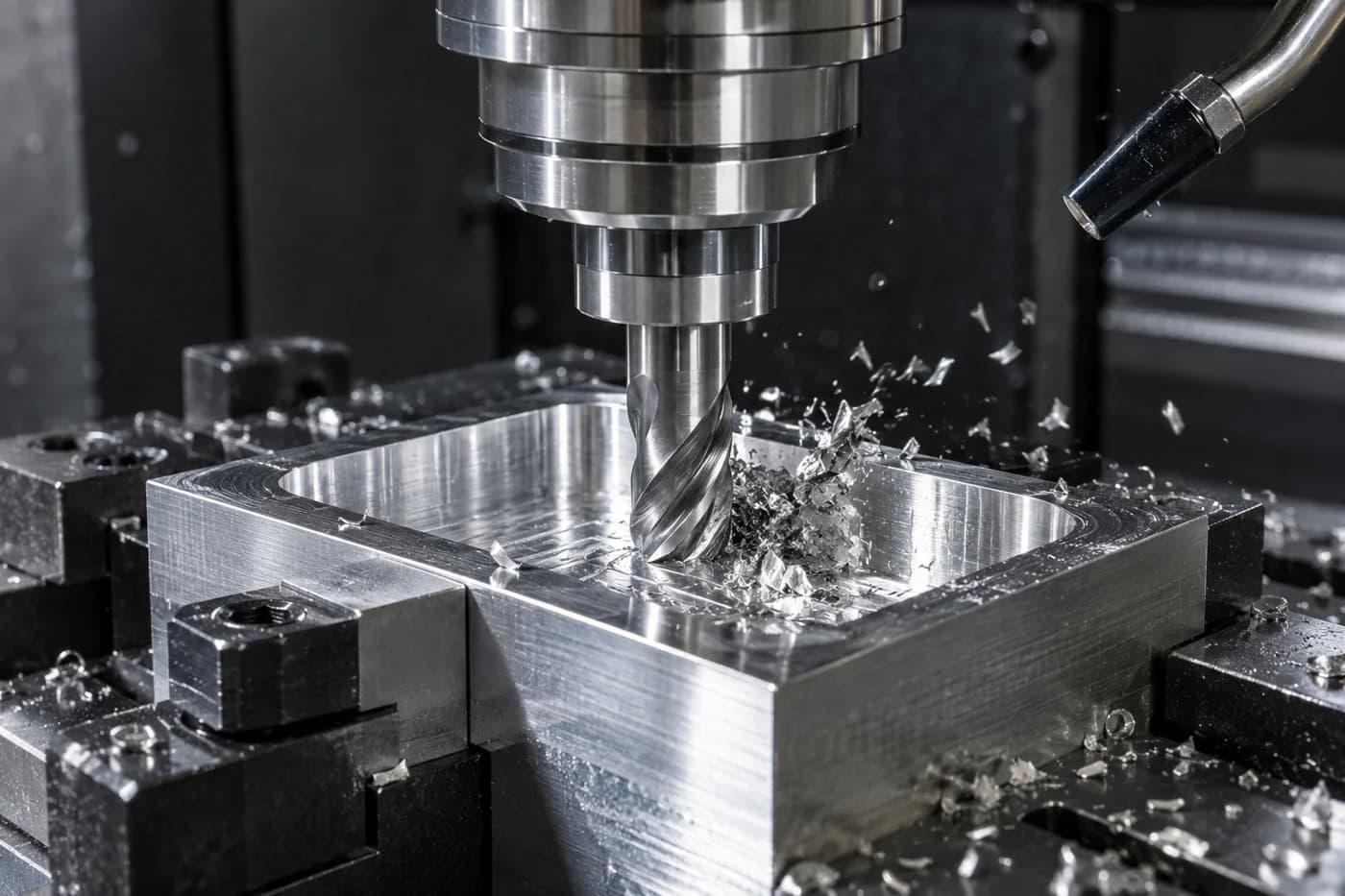
Machining removes material to create or refine features such as bores, threads, slots and mounting faces. In a fabrication package it may follow cutting, forming or welding rather than replace those processes.
The part's function should determine its dimensional requirements. A flat mounting face and a clearance opening do not need the same acceptance criteria. Access, workholding and the sequence of operations affect what can be inspected and how the assembly will fit.
APPLICATIONS / COMPONENTS
Where it fits the project.
Examples for scoping a project. Final suitability depends on the design and operating conditions.
Mounting faces
Interfaces requiring specified flatness or alignment for the mating equipment.
Threaded features
Holes and inserts with thread form, depth and engagement requirements.
Locating bores
Features dimensioned from functional datums rather than arbitrary edges.
Adjustment slots
Controlled travel for assembly or equipment alignment.
SPECIFICATION / REVIEW
Design considerations that shape the process.
Identify datums
Show how the part is located in use and which dimensions determine fit.
Specify requirements selectively
State critical dimensions and inspection needs without applying an unsupported blanket tolerance.
Coordinate the sequence
Clarify whether machining precedes welding or finishing. Coatings and distortion can affect final interfaces.
CONNECTED PROCESSES
Complete the fabrication scope.
QUESTIONS / ANSWERS
Before you specify.
Can every fabricated surface be machined?
Tool access, workholding, geometry and material condition need review. Mark the required surfaces and their function in the drawing.
Should every dimension have a tight tolerance?
Specify accuracy where function requires it and define an agreed general standard for the rest. Unnecessary constraints can change process and inspection requirements.
DEFINE YOUR PROJECT
Put machining in the project brief.
Include the application, drawings, material preferences, quantities, delivery location and schedule. Identify inspection and installation requirements for review.